"At night, on guard, staring into the dark, they were carried away by jumbo
jets.
They felt the rush of takeoff Gone! they yelled. And then velocity,
wings and engines, a smiling stewardess-but it was more than a plane, it was a
real bird, a big sleek silver bird with feathers and talons and high screeching.
They were flying. The weights fell off; there was nothing to bear. They laughed
and held on tight, feeling the cold slap of wind and altitude, soaring, thinking
It's over, I'm gone! - they were naked. They were light and free-it was
all lightness, bright and fast and buoyant, light as light, a helium buzz in the
brain, a giddy bubbling in the lungs as they were taken up over the Clouds and
the war, beyond duty, beyond gravity and mortification anti global entanglements
-Sin loi! They yelled, I'm sorry, motherfuckers, but I'm out of it,
I'm goofed, I'm on a space cruise, I'm gone! -and it was a restful,
disencumbered sensation, just riding the light waves, sailing; that big silver
freedom bird over the mountains and oceans, over America, over the farms and
great sleeping cities and cemeteries and highways and the Golden Arches of
McDonald's. It was flight, a kind of fleeing, a kind of falling, falling higher
and higher, spinning off the edge of the earth and beyond the sun and through
the vast, silent vacuum where there were no burdens and where everything weighed
exactly nothing. Gone! they screamed, I'm sorry but I'm gone! And
so at night, not quite dreaming, they gave themselves over to lightness, they
were carried, they were purely borne."
Tim O'Brien The Things They Carried
Showing posts with label Literature. Show all posts
Showing posts with label Literature. Show all posts

Further On The Road
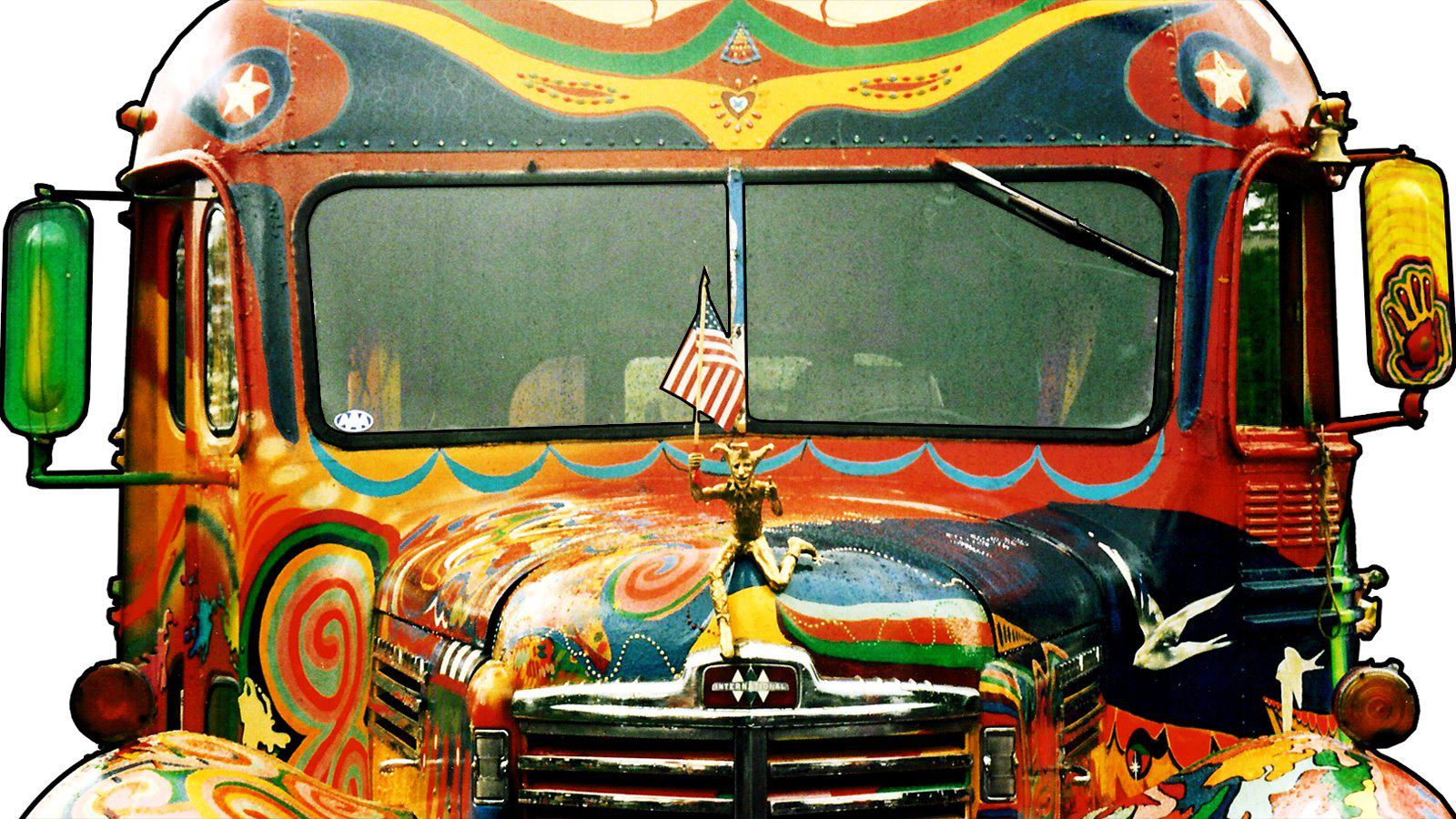
“There’s always more, a little further – it never ends,” wrote Jack Kerouac in his classic 1957 novel On The Road, an account of his cross-country adventures with fellow Beats such as Allen Ginsberg, William S. Burroughs and Neal Cassady. As “Dean Moriarty” (Kerouac’s publisher insisted he fictionalize the names of his friends), Cassady is one of the central figures of this book – a blur of motion and a speed demon behind the wheel – and the main connection between it and The Electric Kool-Aid Acid Test. Tom Wolfe’s 1968 book tracks the early history of Ken Kesey and his Merry Pranksters, one of whom happened to be Neal Cassady, driver of their psychedelic day-glo bus Further. The Beat scene (fueled by speed, booze and jazz) was very different from the psychedelic scene (LSD, marijuana, folk-rock), but Cassady jitters from the pages of one book and into the next without missing a beat.
“He said the world could only be known as it existed in men’s
hearts. For while it seemed a place which contained men it was in reality a
place contained within them and therefore to know it one must look there and
come to know those hearts and to do this one must live with men and not simply
pass among them."

Gelett Burgess
To take the world as one finds it, the bad with the good, making the best of the present moment—to laugh at Fortune alike whether she be generous or unkind—to spend freely when one has money, and to hope gaily when one has none—to fleet the time carelessly, living for love and art—this is the temper and spirit of the modern Bohemian in his outward and visible aspect. It is a light and graceful philosophy, but it is the Gospel of the Moment, this exoteric phase of the Bohemian religion; and if, in some noble natures, it rises to a bold simplicity and naturalness, it may also lend its butterfly precepts to some very pretty vices and lovable faults, for in Bohemia one may find almost every sin save that of Hypocrisy. ...
His faults are more commonly those of self-indulgence, thoughtlessness, vanity and procrastination, and these usually go hand-in-hand with generosity, love and charity; for it is not enough to be one’s self in Bohemia, one must allow others to be themselves, as well. ...
What, then, is it that makes this mystical empire of Bohemia unique, and what is the charm of its mental fairyland? It is this: there are no roads in all Bohemia! One must choose and find one’s own path, be one’s own self, live one’s own life.

His faults are more commonly those of self-indulgence, thoughtlessness, vanity and procrastination, and these usually go hand-in-hand with generosity, love and charity; for it is not enough to be one’s self in Bohemia, one must allow others to be themselves, as well. ...
What, then, is it that makes this mystical empire of Bohemia unique, and what is the charm of its mental fairyland? It is this: there are no roads in all Bohemia! One must choose and find one’s own path, be one’s own self, live one’s own life.

Subscribe to:
Posts (Atom)


 Posts
Posts


